
The Kindergarten am Kap Needs New Structure, Reliability, and Greater Political Oversight
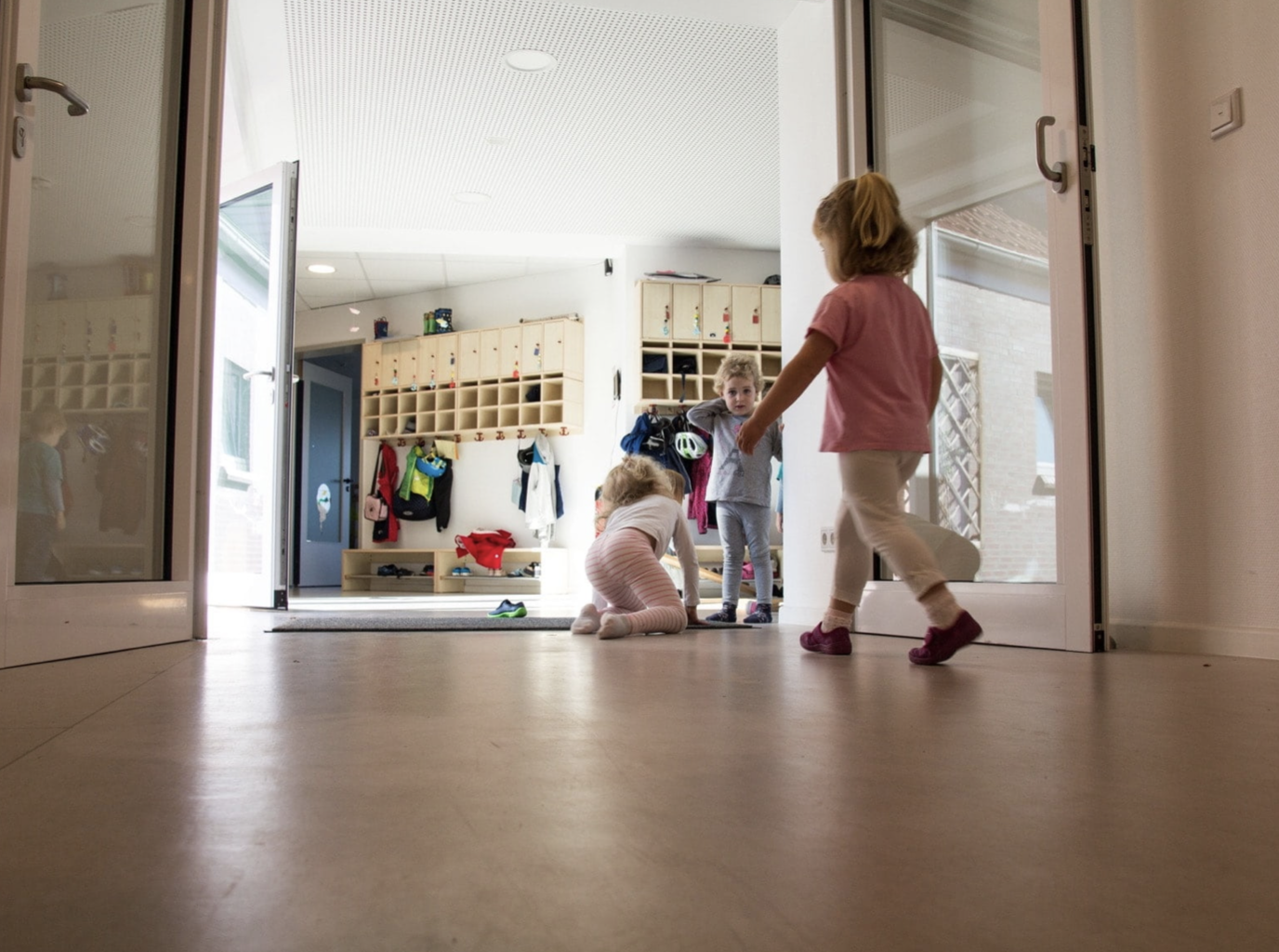
“Open Concept: Everything Always Open”
The FDP Parliamentary Group Norderney takes note of the discussion in the recent public Social Affairs Committee meeting with great concern, but also with growing frustration. What was described there by parents, committee members, and stakeholders is no longer an isolated incident and is not a matter that can be postponed once again. It concerns fundamental deficiencies in pedagogical work, a lack of reliability in the children’s daily routine, and significant shortcomings in preparation for school.
When it is openly discussed in the committee that children lack language skills, fine motor skills, and social competencies, that is an alarm signal. When parents report that their children are in kindergarten from morning until afternoon without a reliable caregiver, without clear routines, and without a recognizable concept, that is unacceptable. And when even parents and the primary school clearly express the need for more structure, clear rules, and binding preschool work, that shows one thing above all: trust in the current practice has been massively shaken.
The Problems Have Not Existed Since Yesterday—They Have Accompanied the Kindergarten for Around 20 Years
From the perspective of the FDP Parliamentary Group, it is particularly serious that the current criticism is not new. On the contrary: according to our perception and the reports of many parents, the situation has been described similarly for around 20 years. Since the introduction of the open concept, there have repeatedly been the same complaints: too little structure, too little commitment, too little orientation, too little targeted support.
That the criticism has never fully reached the public is, in our view, also due to a fatal reflex: Many families think they must somehow endure these three kindergarten years, then the matter is settled. It is precisely this avoidance that has led to too little change in the fundamental problems over the years.
What has repeatedly occurred over two decades is no longer a communication problem or a misunderstanding. There is a structural problem.
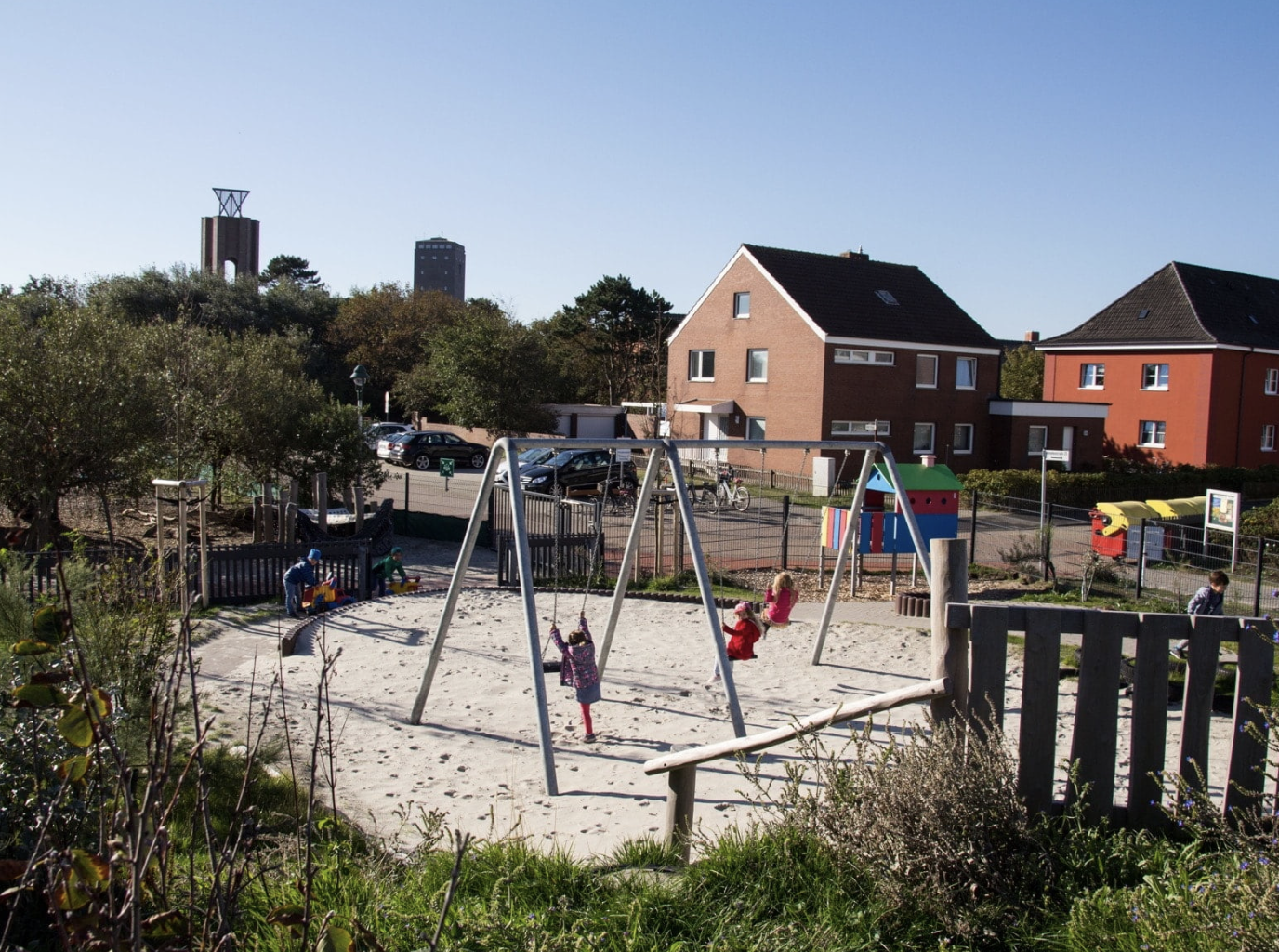
“Open Concept: Children Are Left to Themselves”
The Open Concept Must Finally Be Honestly Evaluated
The so-called open concept was introduced on Norderney around 20 years ago and may have organizational advantages in times of staff shortages. However, what matters is not what a concept is supposed to achieve in theory, but what it actually accomplishes in the children’s daily lives.
And it is precisely here that the assessment from the FDP’s perspective is sobering. The criticism that the kindergarten is, for the most part, more of a custodial facility than a place of reliable early childhood education has been raised for years. It has never truly been dispelled. The recent statements in the Social Affairs Committee show rather that this criticism persists to this day.
A concept that has generated so much dissatisfaction over the years must not be defended, but fundamentally questioned. It must no longer be about preserving a model at any cost when parents and ultimately the children bear the consequences.
FDP Calls for Return to Fixed Groups
Children need fixed groups, fixed caregivers, fixed routines, and fixed rituals. Especially at kindergarten age, reliability, attachment, and orientation are not secondary matters, but the foundation of all good pedagogical work.
A kindergarten must not survive by disguising structural deficiencies with the buzzword flexibility. Children must know who is responsible for them. Parents must be able to trust that their children are guided within a clear pedagogical framework. From our perspective, this naturally includes a binding morning circle, a closing circle, clear rules in daily life, and a recognizable daily structure.
Preschool Work Is Inadequate—This Must No Longer Be Glossed Over
Particularly serious for us is the situation regarding preparation for primary school. When children leave kindergarten without having been adequately strengthened in language, motor skills, and social behavior, that is not only a problem for the school, but a massive failure of the kindergarten itself.
The FDP Parliamentary Group therefore states clearly: “Current preschool work is insufficient. Work must finally be done here in a binding, systematic manner and with clear standards. Every child on Norderney has the right to a good start in school. This includes language support, social rules, concentration skills, motor development, and learning orderly interaction.”
Those Who Are Publicly Funded Must Also Be Publicly Accountable
There is another point that can no longer be ignored politically: the Protestant kindergarten is financed through public funds and parental contributions. It is not the church that bears the main burden, but essentially the general public.
From this, the FDP Parliamentary Group concludes unequivocally: “Where predominantly public money flows, there must also be a high degree of public participation, political oversight, and transparency. It cannot be that the public sector pays almost entirely, but has only limited influence on fundamental questions of structure, quality, and direction. Politics is called upon!”
The Social Affairs Committee Must Meet Regularly—At Least Twice a Year
The FDP Parliamentary Group also emphatically demands that the Social Affairs Committee meet more regularly, namely at least twice a year and more often as needed. Such an important topic as the kindergarten must not only be addressed when public pressure becomes too great. Kindergarten policy requires continuity, oversight, and commitment.
The FDP demands that the kindergarten be required to report to the Social Affairs Committee in the future, particularly on:
- Staffing situation and staff absences
- Pedagogical concept and its practical implementation
- Language support and preschool work
- Cooperation with parents and primary school
- Specific development goals, problems, and measures initiated
It is not enough to take note of problems. They must be regularly accompanied, monitored, and evaluated politically.
The Kindergarten Is Not Only Socially Important, but Also Economically
The kindergarten is not only a social institution, but also a central location factor for Norderney. Good and reliable childcare is a basic prerequisite for parents to be able to work, for families to remain on the island, and for skilled workers to live and work on Norderney permanently at all.
Anyone who speaks about the economy, skilled labor shortages, quality of life, and the island’s future viability must not treat the kindergarten as a secondary issue. Functioning childcare is an important part of social infrastructure and at the same time part of economic infrastructure. When care is unreliable, when quality is questionable, and when parents lose trust, this has direct consequences for employees, employers, and the entire Norderney location. Care during vacation periods is also a task that must be accomplished at a tourism location—money for this is far better spent than, for example, on luxurious youth projects with an extremely small target group.
Especially on an island where recruiting personnel is already difficult, one simply cannot afford a poor or long-disputed care situation. A good kindergarten is therefore always good economic policy.
The FDP Parliamentary Group Norderney therefore demands:
- A return to fixed group structures with clear caregivers.
- A binding concept for language support and school preparation.
- More structure, more rituals, and more reliability in kindergarten daily life.
- Greater participation by the city and politics in an institution that is largely publicly financed.
- Regular meetings of the Social Affairs Committee, at least twice a year.
- Mandatory reporting by the kindergarten to the Social Affairs Committee.
- Clear quality standards instead of further reassurances.
For around 20 years there has been criticism of the open concept, of lacking structure, and of inadequate preschool work. The recent reports from the Social Affairs Committee show that this criticism has not disappeared, but persists to this day.
The FDP Parliamentary Group Norderney therefore expects decisive corrective action. The Kindergarten am Kap must not remain a permanent construction site. It must once again become what it should be: a reliable place of care, education, and preparation for life and for school.
The FDP Norderney will have the kindergarten placed on the agenda in future meetings of the Social Affairs Committee and the Administrative Committee and will monitor developments; at the same time, we will observe the situation with parents and advocate for a reorientation of the kindergarten.
Explanation of Open Concept / Closed Concept / Partially Open Concept
In the closed concept, children belong to a fixed group with fixed caregivers and clear routines. This creates orientation, reliability, and security.
In the partially open concept, fixed groups remain, while at the same time there are temporarily opened activities and spaces. It combines structure with more choices.
In the open concept, children can move freely between rooms and activities. This can promote independence, but is pedagogically significantly more demanding. It requires sufficient staff, clear rules, suitable spaces, fixed caregivers, and close coordination within the team.
What matters is not which concept appears most modern, but whether the institution can provide children with security, orientation, and good support under the actual conditions.
Expert Assessment* on the Open Daycare Concept Norderney, Staffing Requirements, Rituals, and Caregivers:
“…Without knowing the daycare and having spoken with everyone, I can only give my personal view on the open concept. This concept can work well if there is an adequate staff ratio and competent staff on site. It requires a great deal of organization and planning for this concept to function well. Without this and without connection to core groups or fixed caregivers, many children are overwhelmed. At this age, children cannot yet organize themselves sufficiently. They need a great deal of structure in daily life to orient themselves. This includes recurring fixed rituals (e.g., circle time) and orientation in daycare daily life (e.g., through picture cards, etc.). There are very different models, such as cross-group activities. But this also requires a great deal of preparation and thus time, which educators often do not have. I am not familiar with the Lower Saxony system. In xy, we would first invite a professional consultant. They would then review the concept with all stakeholders and, if necessary, develop new approaches/concepts together. Unfortunately, I cannot say much more from a distance…”
*The expert works in quality development and program support for daycare centers and nurseries as an upstream administrative authority in a federal state.
Links:
Self-Presentation and Information on Kindergarten Norderney
Explanatory Video – Open/Closed Concept
Pros and Cons – Requirements for Open Concept
Retrospective – Problems in Kindergarten 2010
Photos: Kindergarten am Kap Norderney